In many Assamese homes, the first response to an upset stomach is not a pharmacy. It is a bowl of rice with bhedailota leaves, or a sour curry made with thekera. A child with a cough gets tulsi leaves with honey. Elders talk about manimuni as food for the brain. This knowledge is rarely written down. It passes from grandmother to granddaughter, and from village healer to apprentice.
Assam sits inside one of the world’s richest plant regions. Researchers estimate that around 1,350 plant species are used in traditional medicine across Northeast India, home to about 145 tribal communities. A single survey of the Assamese community in Dibrugarh district recorded 174 medicinal species, most of them used for digestive complaints. A review of studies from Dima Hasao and Karbi Anglong counted 273 species used by communities such as the Karbi and Dimasa.
This article looks at ten plants that are well known in Assam. For each one, it explains how the plant is traditionally used, what scientific research has actually found, and what to be careful about. The aim is to respect traditional knowledge while being honest about where the evidence is strong, where it is promising, and where it is still missing.
Important: This article is for general information. It is not medical advice. Do not use any plant to replace treatment prescribed by a doctor, and consult a qualified practitioner before using herbal remedies, especially during pregnancy, while breastfeeding, for children, or if you take regular medicines.
How to read the evidence
Scientific support for medicinal plants comes in different strengths. It helps to know the difference.
| Level of evidence | What it means |
|---|---|
| Traditional use | The plant has been used for generations. This tells us what people believed worked, not whether it does. |
| Laboratory and animal studies | Extracts show effects in test tubes or in animals. Useful for finding leads, but results often do not carry over to people. |
| Human clinical trials | The plant was tested on people. Small or poorly designed trials give weak evidence. |
| Systematic reviews and meta-analyses | Researchers combine many trials. This is the strongest form of evidence, though it is only as good as the trials it includes. |
As you will see, most Assamese medicinal plants have strong traditional use and plenty of laboratory research, but only a few have good-quality human trials.
Ten medicinal plants of Assam at a glance
| Assamese name | Common English name | Scientific name | Main traditional use | Strength of human evidence |
|---|---|---|---|---|
| Tulsi | Holy basil | Ocimum tenuiflorum (syn. O. sanctum) | Cough, cold, stress | Moderate (many small trials) |
| Manimuni | Indian pennywort, gotu kola | Centella asiatica | Memory, digestion, skin wounds | Limited to moderate |
| Bhedailota | Skunk vine | Paederia foetida | Stomach upsets, joint pain | Mostly laboratory and animal studies |
| Kalmegh | Green chiretta | Andrographis paniculata | Fever, cold, liver complaints | Moderate for cold symptoms |
| Brahmi | Water hyssop | Bacopa monnieri | Memory, anxiety | Moderate (small trials) |
| Halodhi | Turmeric | Curcuma longa | Wounds, joint pain, skin | Promising for knee pain; safety concerns with supplements |
| Thekera | Garcinia | Garcinia pedunculata | Dysentery, digestion | Mostly laboratory and animal studies |
| Ou tenga | Elephant apple | Dillenia indica | Digestion, hair care, fever | Mostly laboratory and animal studies |
| Sarpagandha | Indian snakeroot | Rauvolfia serpentina | High blood pressure, sleep | Strong historically, but now replaced by safer drugs |
| Agaru (Sasi) | Agarwood | Aquilaria malaccensis | Fragrance, traditional medicine | Limited; mainly valued for its resin |
1. Tulsi (holy basil)
Tulsi grows in the courtyard of almost every Assamese Hindu household, where it is also worshipped. Its leaves are chewed raw, boiled into tea, or mixed with honey and ginger to ease coughs and colds.
What research shows: A 2017 systematic review in Evidence-Based Complementary and Alternative Medicine found 24 human studies of tulsi, covering about 1,100 people. The studies reported improvements in blood sugar, blood pressure, cholesterol, stress and immune measures. No study reported serious side effects. However, most trials were small and short, ran for 2 to 13 weeks, and used different preparations, so the results are encouraging rather than conclusive.
Cautions: Tulsi may lower blood sugar, so people taking diabetes medicines should be careful. Its use during pregnancy and breastfeeding has not been adequately studied.
2. Manimuni (Indian pennywort)
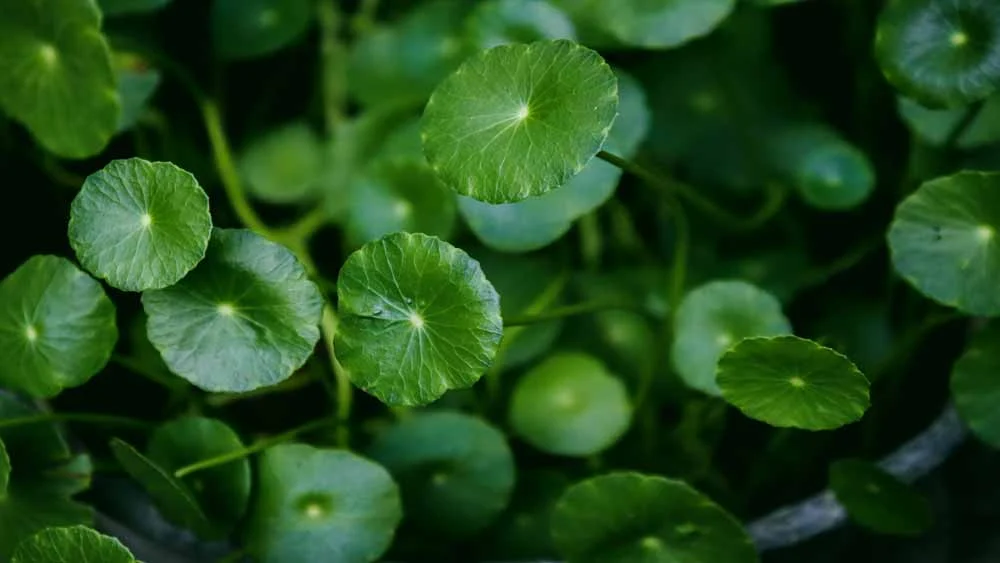
Manimuni is a small creeping herb with round leaves that grows in damp, shady places. In Assam it is eaten as a chutney, mixed with rice or cooked in a light curry. It is traditionally given for stomach problems, weak memory and slow-healing wounds. During Bohag Bihu, many households eat a mix of wild greens that often includes manimuni.
What research shows: A 2017 meta-analysis in Scientific Reports reviewed 11 trials of Centella asiatica for brain function. It found some improvement in alertness and reduced anger in some studies, but no strong overall evidence that it improves memory or cognition. A 2022 systematic review found four clinical trials suggesting benefits for wound healing, while noting that more studies are needed.
Cautions: Generally considered safe as food. A few cases of liver injury have been reported with concentrated supplements.
3. Bhedailota (skunk vine)
Bhedailota is a climbing vine with a strong, sulphur-like smell when its leaves are crushed. Despite the smell, it is a favourite home remedy in Assam. The leaves are cooked with rice, fried or made into a soup for diarrhoea, dysentery, stomach pain and gas. It is also used for joint pain. In the Dibrugarh survey, it was among the plants with the highest use value.
What research shows: Laboratory and animal studies over the past three decades report anti-inflammatory, antidiarrhoeal, antioxidant, pain-relieving and liver-protecting effects, among others. Reviews published between 2023 and 2025 summarise this research but also note that well-designed human clinical trials are still lacking.
Cautions: Safe as a cooked vegetable in normal amounts. Concentrated extracts have not been tested for safety in people.
4. Kalmegh (green chiretta)
Kalmegh is an extremely bitter herb, sometimes called the “king of bitters”. In Assam, as across India, its leaves or decoction are taken for fever, cold, loss of appetite and liver complaints.
What research shows: Kalmegh has some of the best human evidence in this list. A 2017 systematic review and meta-analysis in PLoS ONE included 33 trials with 7,175 patients. It found that Andrographis paniculata improved symptoms of acute respiratory infections such as cough and sore throat, and shortened their duration, compared with placebo or usual care. Side effects were mostly minor and digestive. The authors cautioned that many trials were of poor quality.
Cautions: Allergic reactions have been reported. It is not recommended in pregnancy. People on blood pressure or blood-thinning medicines should seek advice first.
5. Brahmi (water hyssop)
Brahmi is a small succulent herb that grows in wet places and paddy margins. It is traditionally used to improve memory, calm anxiety and help sleep. Note that the name “brahmi” is sometimes also used for manimuni, which causes confusion when buying products.
What research shows: A 2014 meta-analysis in the Journal of Ethnopharmacology combined nine randomised trials with 437 people who took standardised Bacopa extract for at least 12 weeks. It found improvements in speed of attention and reaction time. Other reviews describe the effects as modest and inconsistent across different memory tests.
Cautions: Digestive upset, such as nausea or loose stools, is the most common side effect. Effects, if any, take weeks to appear.
6. Halodhi (turmeric)
Turmeric is grown widely in Assam and used every day in cooking. At home it is applied to cuts and bruises, mixed in warm milk for colds, and used in skin care, including during wedding rituals.
What research shows: According to the US National Center for Complementary and Integrative Health (NCCIH), there is initial positive evidence that turmeric or curcumin may help knee osteoarthritis pain, fatty liver and cholesterol levels, but higher-quality studies are still needed. For most other health claims, there is not enough evidence.
Cautions: Turmeric in food is considered safe. Concentrated supplements are different. Rare but serious cases of liver injury have been reported, particularly with high-dose or “highly absorbable” curcumin products. NCCIH advises stopping and seeing a doctor if symptoms such as dark urine, jaundice, nausea or tiredness appear.
7. Thekera (garcinia)
Thekera is a large sour fruit from a semi-wild tree found across Assam. Slices are sun-dried and stored for the whole year. Thekera dal or fish curry is a classic Assamese dish, especially in summer, and the fruit is a long-standing home remedy for dysentery and indigestion.
What research shows: A 2021 review in Mini-Reviews in Medicinal Chemistry confirmed that thekera is widely used in Assamese folk medicine for gastrointestinal disorders. The fruit contains hydroxycitric acid, garcinol and polyphenols. Laboratory and animal studies suggest antioxidant, antidiabetic and anti-inflammatory activity. The reviewers concluded that the mechanisms and effects in people are still poorly understood.
Hydroxycitric acid is the same compound sold in “garcinia” weight-loss supplements made from a related species. Evidence that such supplements produce meaningful weight loss is weak, and some products have been linked to liver problems.
Cautions: Safe as a food ingredient. Avoid concentrated garcinia supplements without medical advice.
8. Ou tenga (elephant apple)
Ou tenga is the large green fruit of a handsome evergreen tree. Its fleshy, sour sepals are cooked with fish, lentils or jaggery. Traditionally, the fruit and leaves are used for indigestion, fever, cough, hair loss and dandruff, and the fruit juice is applied to the scalp.
What research shows: A 2025 review in Chinese Herbal Medicines found that Dillenia indica contains flavonoids, tannins, saponins and triterpenoids, with antioxidant, anti-inflammatory, antimicrobial and antidiabetic effects in laboratory and animal studies. The fruit is also a source of vitamin C and fibre. The authors stressed that clinical trials are needed before any medical claims can be made.
Cautions: Safe as food. Very large amounts may upset the stomach, and the same review noted rare reports of liver toxicity at excessive intake.
9. Sarpagandha (Indian snakeroot)
Sarpagandha, known in Assamese as arachoritita, is a small shrub of moist forests. Its roots have been used for centuries in Indian medicine for high blood pressure, insomnia, anxiety and snakebite.
What research shows: This is the plant with the most remarkable scientific history on the list. In 1931, Indian physicians Gananath Sen and Kartik Chandra Bose reported its blood-pressure-lowering and calming effects. In 1949, the Mumbai cardiologist Rustom Jal Vakil brought it to international attention. Its main alkaloid, reserpine, became one of the world’s first widely used drugs for hypertension in the 1950s.
Reserpine is now rarely used, because it can cause serious side effects, including depression. Modern blood pressure medicines are safer.
Cautions: Do not self-medicate with sarpagandha. It is a potent drug plant, and it should only be used under qualified medical supervision. Over-harvesting has made it scarce in the wild, and it is listed in Appendix II of the Convention on International Trade in Endangered Species (CITES).
10. Agaru (agarwood)
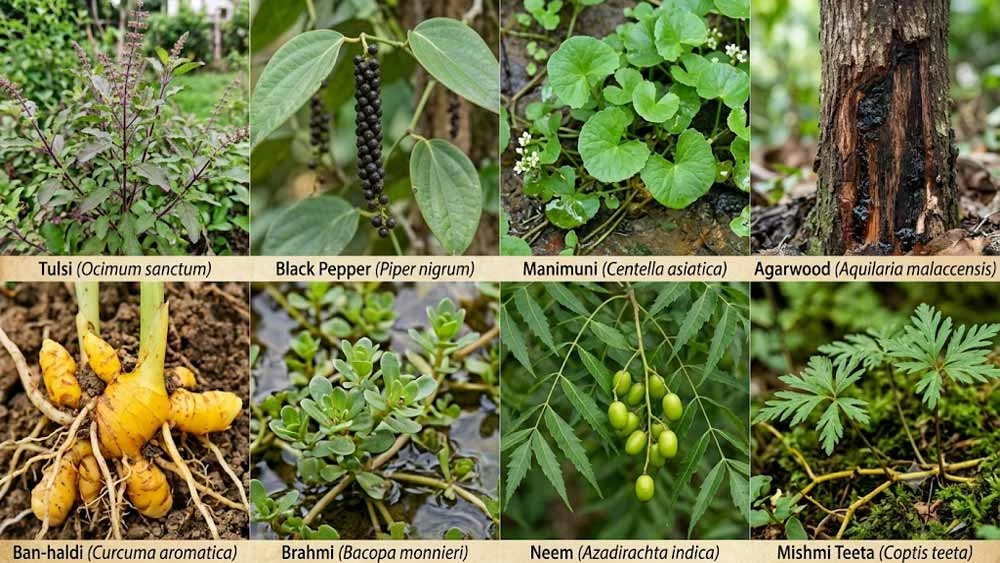
Assam is famous for agarwood, known locally as agaru or sasi. When the tree Aquilaria malaccensis is infected by fungi or wounded by insects, it produces a dark, fragrant resin. This resin is used in perfume (oud), incense and traditional medicine. Hojai district is the centre of processing, while Golaghat, Jorhat and Sivasagar have many homestead plantations.
Why it matters: Agarwood is more important for conservation than for home medicine. Unsustainable harvesting led the IUCN to classify Aquilaria malaccensis as Critically Endangered in 2018, after its population declined by more than 80%. It has been listed in CITES Appendix II since 1995, following a proposal by India. The Government of Assam’s Agarwood Promotion Policy 2020 encourages cultivation and sustainable trade, rather than collection from the wild.
Using medicinal plants safely
Traditional remedies feel familiar, so it is easy to forget that plants contain active chemicals. Natural does not always mean safe. These simple rules reduce the risk:
- Prefer food use. Eating bhedailota, manimuni, thekera or ou tenga as part of normal meals is very different from taking concentrated extracts or capsules.
- Never stop prescribed medicines in favour of a herbal remedy without talking to your doctor.
- Tell your doctor what you take. Some herbs interact with medicines for diabetes, blood pressure and blood clotting.
- Be extra careful with children, pregnant and breastfeeding women, older adults and people with liver or kidney disease.
- Identify plants correctly. Several plants share local names, and mistakes can be harmful.
- Buy from reliable sources. Herbal products can be contaminated or adulterated. Choose licensed AYUSH products and consult registered practitioners.
- Stop and seek help if you notice rashes, stomach pain, dark urine, yellowing of the eyes or skin, or any unusual symptoms.
Protecting plants and knowledge
Two things are under pressure at the same time: the plants and the knowledge about them. Researchers who document Assamese ethnomedicine repeatedly note that younger generations are losing interest and that much knowledge survives only in oral form. In the Dibrugarh survey, 12 of the 174 species recorded were listed as threatened by IUCN or CITES.
Practical steps can help:
- Grow common medicinal plants such as tulsi, manimuni, bhedailota and brahmi in home gardens rather than collecting from the wild.
- Support cultivation programmes for threatened species such as agarwood and sarpagandha.
- Record family knowledge, including local names, preparation methods and the plants’ uses, before it is lost.
- Respect the rights of communities over their traditional knowledge, especially when it leads to commercial products.
Conclusion
Assam’s medicinal plants are part of daily life, from the sour tang of thekera in summer curries to the bitter leaves of kalmegh during a fever. Research has confirmed some traditional uses: kalmegh for cold symptoms, brahmi for attention, and sarpagandha for blood pressure, the last leading to a globally important medicine. For many other plants, including bhedailota, thekera and ou tenga, laboratory results are promising but human trials are still missing.
The sensible approach is to value these plants as food and as part of Assam’s heritage, use concentrated remedies cautiously and with advice, and help protect both the plants and the knowledge that surrounds them.
References
Ethnobotanical surveys in Assam
- Gogoi, P. and Nath, N. (2021). Indigenous knowledge of ethnomedicinal plants by the Assamese community in Dibrugarh District, Assam, India. Journal of Threatened Taxa, 13(5): 18297–18312.
- Begum, K., Mylliemngap, W. and Lyngdoh, N. Quantitative ethnobotanical analysis of ethnomedicinal flora used by the Eastern Himalayan indigenous communities of Assam, India. Ethnobotany Research and Applications.
- Traditional knowledge of ethnomedicinal plants used by the Mishing community in Sivasagar District, Assam. Plant Science Today.
Plant-specific research
- Jamshidi, N. and Cohen, M.M. (2017). The clinical efficacy and safety of tulsi in humans: a systematic review of the literature. Evidence-Based Complementary and Alternative Medicine, 2017: 9217567.
- Puttarak, P. et al. (2017). Effects of Centella asiatica on cognitive function and mood related outcomes: a systematic review and meta-analysis. Scientific Reports, 7: 10646.
- Arribas-López, E. et al. (2022). A systematic review of the effect of Centella asiatica on wound healing. International Journal of Environmental Research and Public Health, 19(6): 3266.
- Das, B.K. et al. (2023). A delve into the pharmacological targets and biological mechanisms of Paederia foetida Linn. Naunyn-Schmiedeberg’s Archives of Pharmacology, 396(10): 2217–2240.
- Paederia foetida Linn (Rubiaceae): chemical diversity, phytopharmacological potential, quantitative analysis and clinical approaches. Combinatorial Chemistry and High Throughput Screening, 2025; 28(19): 3293–3325.
- Hu, X.-Y. et al. (2017). Andrographis paniculata for symptomatic relief of acute respiratory tract infections in adults and children: a systematic review and meta-analysis. PLoS ONE, 12(8): e0181780.
- Kongkeaw, C. et al. (2014). Meta-analysis of randomized controlled trials on cognitive effects of Bacopa monnieri extract. Journal of Ethnopharmacology, 151(1): 528–535.
- StatPearls: Bacopa monnieri. National Library of Medicine.
- National Center for Complementary and Integrative Health: Turmeric. US National Institutes of Health.
- Bhattacharjee, S. and Devi, R. (2021). A comprehensive review of Garcinia pedunculata Roxb. and its therapeutic potential. Mini-Reviews in Medicinal Chemistry, 21(20): 3113–3143.
- Bioactive phytochemicals, pharmacological, and therapeutic potential of Dillenia indica: a comprehensive review of current research. Chinese Herbal Medicines, 2025; 17(4): 628–642.
- Rauvolfia serpentina: crop fact sheet, Purdue University NewCROP (archived): Assamese name and traditional uses.
- Rauvolfia serpentina: its history, botany and medical use. Economic Botany (historical review).
Conservation
- CITES SC77 Inf. 09: Report on non-detriment findings of Aquilaria malaccensis in India (2023)
- TRAFFIC factsheet: Agarwood: legal status in India, CITES and IUCN listings.
- Scroll.in: Assam’s tea gardens and agarwood: Assam Agarwood Promotion Policy 2020 and distribution in Assam.