
The Andaman Islands are known for their natural beauty, and travelling there leaves a lasting impression. In 2019 I visited the islands with my family. Of all the places we saw, the one that stayed with me most was the Cellular Jail, also known as Kala Pani.
Did you know? The Union Territory of Andaman and Nicobar Islands is made up of 572 islands. Only a few dozen of them are inhabited. The Cellular Jail stands in the territory’s capital, Port Blair, which the Government of India renamed Sri Vijaya Puram in September 2024.
Stories that come alive at night
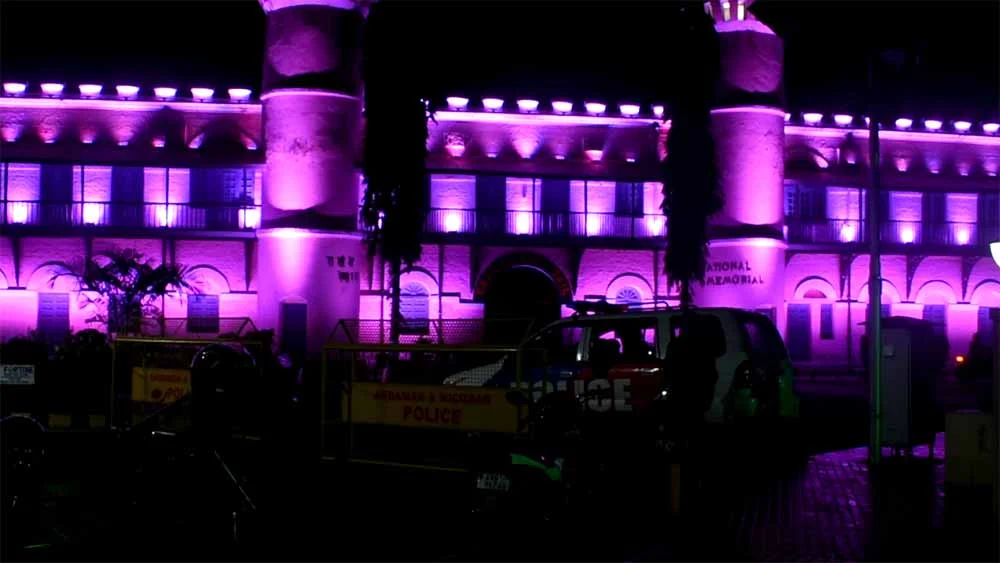
The Cellular Jail is a place that brings the sacrifices of India’s freedom fighters into focus. While we were there, I watched the evening light and sound show, and the sense of what the revolutionaries had given up moved me deeply.
During the show, lights pick out particular cells and corners of the prison one at a time. As each part is lit, the narrator tells what happened in that spot, and the cruel events of the past seem to come alive in the narrator’s voice. The days of the imprisoned freedom fighters seemed to pass in front of my eyes.
The show tells the story of the long, brutal treatment of prisoners under British rule, and the suffering of the revolutionaries who fought for independence. It is painful, but it is also a story of great courage. Those moments inside the jail are still fresh in my memory.
Why it was called Kala Pani
The Cellular Jail is also called Kala Pani. One explanation I heard is that “kaal” means time or death. The prison was surrounded on all sides by sea, and no prisoner had any route of escape from it.
Did you know? The literal meaning of Kala Pani is “black water”. In the 19th century, many Indians believed that crossing the open sea meant losing one’s caste and social standing. Being sent across the sea to the Andamans was therefore seen as a punishment beyond imprisonment itself: a sentence of exile, with little hope of return.
How the prison came to be built
After the uprising of 1857, the British sent many Indian rebels to the Andamans and held them on an island called Ross Island. As the number of prisoners grew, they ran out of space, and construction of a new prison began at Port Blair. The Cellular Jail was started in 1896 and completed in 1906. The British used it to imprison freedom fighters deported from the mainland. Well-known figures such as V. D. Savarkar and Batukeshwar Dutt spent years of imprisonment here.
Did you know? The British set up the penal settlement in the Andamans in 1858, right after the 1857 uprising. Ross Island was the administrative headquarters of the settlement. In 2018 it was renamed Netaji Subhas Chandra Bose Dweep. During the Second World War, Japanese forces occupied the islands, and the prison, from 1942 to 1945.
A prison shaped like a wheel
The Cellular Jail was built in the shape of a wheel, with seven wings. Each wing was three storeys high. At the very centre stood a tall tower, from which guards could watch every wing. If anything unusual happened, an alarm could be sounded from the tower. Not all of the wings survive today.
Did you know? The seven wings spread out from the central tower like the spokes of a bicycle wheel. The cells of each wing face the back wall of the next wing, so prisoners could never see one another. Only three of the seven wings stand today; the other four were damaged and later demolished.
The gallows, the mess and the workshops
We were told that the prisoners were given their small daily meal in a mess built directly opposite the place of execution. The layout was meant to make the prisoners, as they ate, see the gallows and be broken in spirit.
The workshops where prisoners laboured were built between the wings of the jail. Today these have been turned into exhibition halls. When I saw the examples of the work the prisoners were forced to do, I shuddered. The pictures from that history are very painful. Prisoners were given a set quantity of mustard seed to crush for oil, or coconut fibre to make into rope, all within a fixed time. If they failed to deliver the full amount on time, they were punished severely, in an open area where every prisoner could watch. Examples of these punishments are still on display.
I had never seen a place of execution before. Seeing the wooden platform, the nooses and the whole scene left me deeply shaken.
Did you know? The oil mill, or kolhu, was one of the most feared punishments. Prisoners were made to turn it by hand, in place of a bullock, to press oil. The daily work quotas were often impossible to meet, and prisoners who fell short faced severe punishment.
The cells that gave the jail its name
Once you see the rooms, you understand the name “Cellular”. There are hundreds of tiny cells, and from inside them no prisoner could see another. All anyone could see was the back wall of the next wing and the central part of the building.
Did you know? The jail had 698 cells in total, according to both UNESCO and Encyclopaedia Britannica. Each cell measured about 13½ feet by 7 feet (roughly 4.1 m by 2.1 m), with a heavy iron grill door and a single small ventilator placed high up on the back wall. (Other records give slightly different totals, such as 693.)
Each wing was joined to the central tower by an iron bridge. We were told that these bridges were removed at night, so that even if a prisoner tried to escape, they could not get out of the wing. We also heard that prisoners were moved to a different cell every month, so that they could not form any bond with the person in the next cell.
Life inside
Life for the prisoners in this jail was extremely hard. Besides cruel physical torture, the British left nothing untried to break them mentally. Many prisoners suffered mental breakdowns, and some died.
For the whole day, prisoners were allowed out only briefly in the morning. The rest of the time they were locked into cells smaller than a modern bathroom, which had no toilet. After the morning, they were given only an earthen pot to use when they needed to relieve themselves.
The Savarkar brothers
V. D. Savarkar’s cell has now been carefully preserved for visitors. The prisoners were kept so isolated from one another that, according to the story told there, Savarkar only learned after about a year that his own brother was imprisoned in the same jail. The two met only once, by chance, while working in the prison compound.
Did you know? V. D. Savarkar was held in the Cellular Jail from 1911 to 1921. His elder brother, Ganesh Damodar (Babarao) Savarkar, was imprisoned there at the same time. Savarkar’s famous escape attempt took place before he reached the Andamans: in 1910 he tried to escape from a British ship at Marseilles, in France, while being taken to India for trial.
The story that moved me most: Mahavir Singh
There are many more stories here, cruel enough to make you tremble: inhuman torture, filthy living conditions, and even pictures showing punishments that used animals. My heart ached when I saw them. But the story that saddened me most was that of Mahavir Singh.
Mahavir Singh led a protest inside the jail against the cruelty of British rule, through a mass hunger strike. To break his fast, British officials forced milk into him, and the milk went into his lungs. That brave soul died as a result. It hurts to think that after his death, the officials threw his body into the sea.
Did you know? Mahavir Singh (1904–1933) was a revolutionary from the circle of Bhagat Singh. He had helped Bhagat Singh, Batukeshwar Dutt and Durgawati Devi escape from Lahore, and was later arrested in the Second Lahore Conspiracy Case. He joined the hunger strike that began on 12 May 1933 in protest against the prisoners’ conditions. During force-feeding, the tube was wrongly placed and milk entered his lungs. He died on 17 May 1933, aged 28. A fellow prisoner, Gaya Prasad, was later told that his body had been thrown into the sea. Two other strikers, Mohit Moitra and Mohan Kishore Namadas, also died during this hunger strike. Their names are less well known, but they are equally part of the jail’s history.
The lives of the revolutionaries stir different feelings at different moments: sometimes anger, sometimes a mix of emotions, and sometimes a swell of pride.
Beauty and sorrow side by side
When I first stepped into the Cellular Jail, I couldn’t deny that the place was beautiful. Green lawns lie against faded, reddish-brown brick walls. From the roof you can see the waves of the sea and small islands smiling in the distance. Yet even though the prison was built with real skill, the air felt heavy. Every brick seems to stand witness to an untold, painful story. The only positive feeling I had there was pride.
Did you know? The Cellular Jail was declared a National Memorial in 1979. In 2014 India submitted it to UNESCO’s tentative list of possible World Heritage Sites, the step before full nomination.
A tribute
I will never forget this journey. I bow with deep respect to the great revolutionaries who endured cruelty to its very limits for our freedom, and who kept resisting until their last breath.
Pranabesh Barman, 22 June 2021
Practical notes for visitors
- Location: Sri Vijaya Puram (formerly Port Blair), South Andaman.
- Light and sound show: held in the evening. Check the current show times, languages and ticket booking on the official portal before you go.
- Time needed: allow at least 2–3 hours for the jail, the museum galleries and the rooftop view, plus the evening show.
- Nearby: Netaji Subhas Chandra Bose Dweep (formerly Ross Island) is a short boat ride away. It has the ruins of the old British settlement.
- Respect the site: this is a memorial. Keep your voice down in the cell blocks and near the gallows.
References
- UNESCO World Heritage Centre: Cellular Jail, Andaman Islands (tentative list, 2014)
- Encyclopaedia Britannica: Cellular Jail
- Mahavir Singh (revolutionary), Wikipedia, with links to Mohit Moitra and Mohan Kishore Namadas
- National Herald: ‘Veer’ Mahabir Singh’s body was thrown into the sea… (27 September 2020)
- Ganesh Damodar Savarkar, Wikipedia
- Deccan Herald: Port Blair renamed Sri Vijaya Puram (September 2024)
- Andaman and Nicobar Tourism (official site): Cellular Jail entry fees